Battlefield 6 - Season 4: Wake Island
Role: Level Designer
Studio: Ripple Effect Studios
Project Overview
I led day-to-day level design development for Wake Island under design leadership, translating the map's design vision into playable experiences. My work focused on adapting the classic map for Battlefield 6, implementing multiplayer modes, improving naval combat, and refining gameplay balance through playtesting.
Key Responsibilities
Led day-to-day level design development of Wake Island under the Level Design Director's guidance.
Translated high-level design goals and feedback into actionable level design work.
Owned the design and implementation of all game modes supported on the map.
Collaborated with design leadership and cross-disciplinary teams throughout development.
Iterated on the map and its game modes to support gameplay quality and project goals.
Featured in EA's Developer Map Guide
I was featured in EA's official Wake Island Developer Map Guide, discussing the map's design and development.
Paper Map Design — Reimagining Wake Island
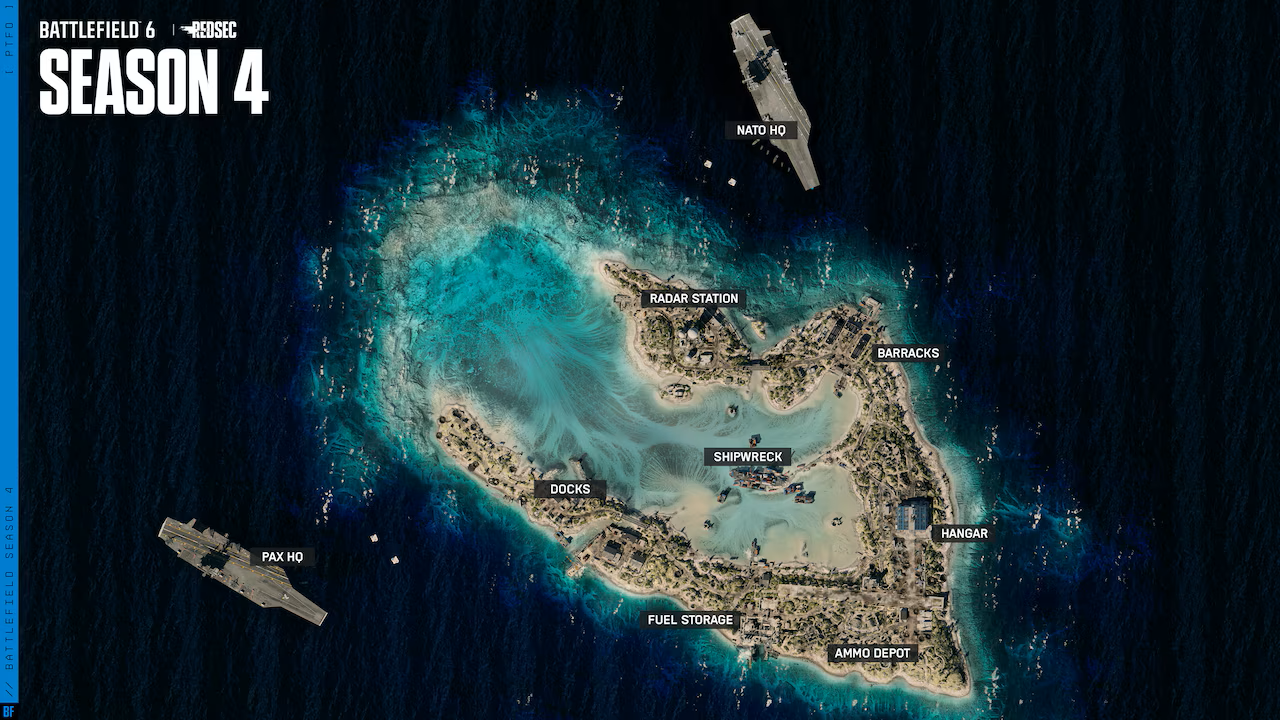
Challenge: Modernize Wake Island's existing multiplayer layouts while preserving the map's identity, addressing negative player feedback from Battlefield V, and accommodating new Battlefield 6 game modes.
Solution: I designed and iterated on paper maps for Conquest, Breakthrough, Rush, Team Deathmatch, Domination, Escalation, Strikepoint, and Squad Deathmatch, refining objectives, playable areas, and gameplay flow.
Result: Established revised layouts that served as the foundation for game-mode implementation and playtesting.
Conquest: Making Naval Combat Meaningful
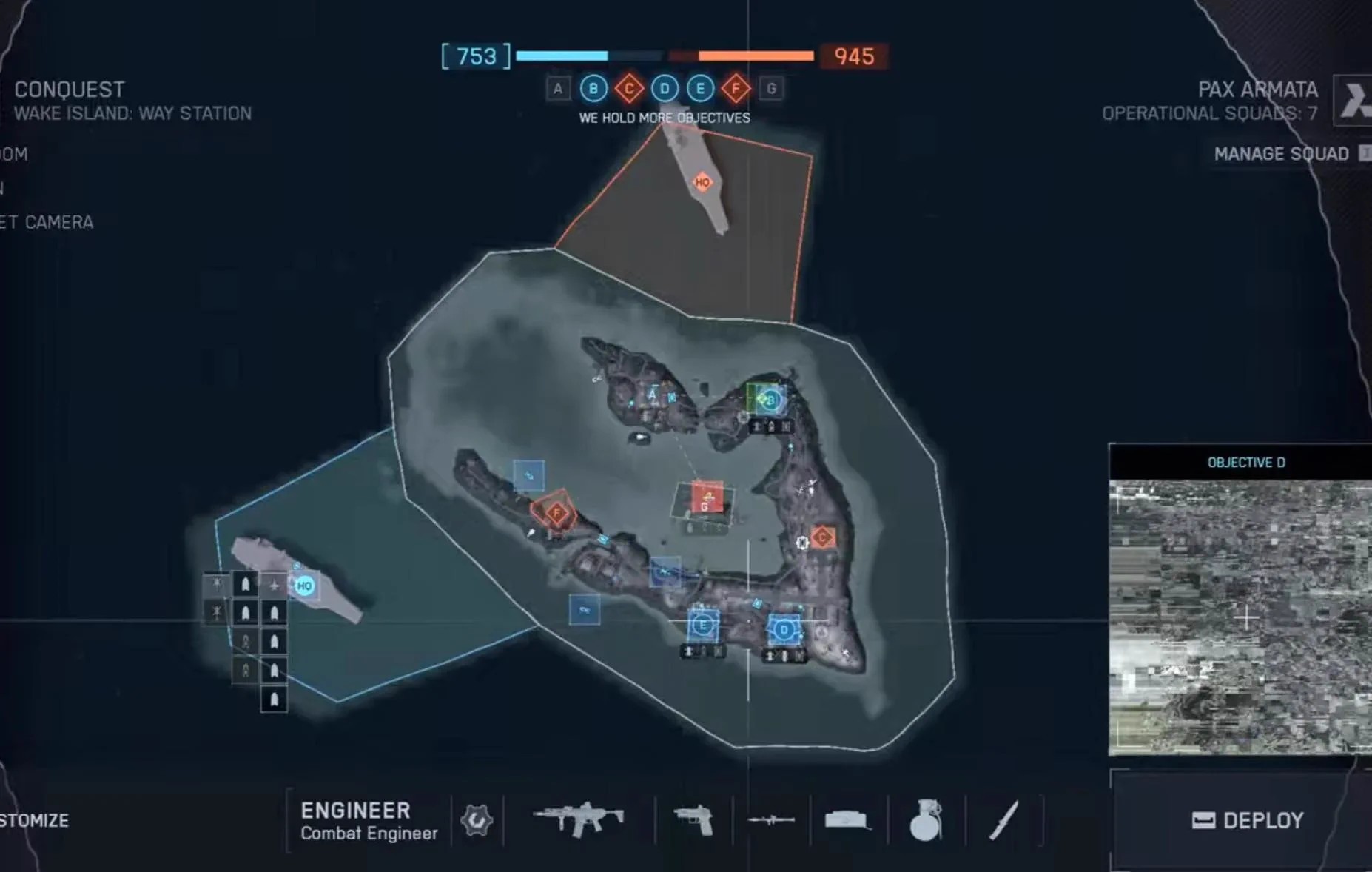
Challenge: Long sightlines across Wake Island's inlet exposed infantry and boats to distant attacks. Boats also lacked strategic importance. The layout needed an additional central objective to balance the distance between all capture points. We also had the problem of long travel times for infantry to get to the island from the carrier and especially if all the vehicles for the team ran out and people were forced to swim from carrier to island. To solve this, we added ziplines from the carrier to the island. But, due to believability and due to feedback from leadership, we decided to remove the ziplines from carrier to island. This was also to shorten the engagement distances and time to kill for both teams.
Solution: We introduced a central POI and additional cover to break sightlines and improve traversal. I refined objective placement, and we extended capture areas into the water so boats could contest objectives.
Result: Improved cover and naval survivability while giving boats a more meaningful role in objective gameplay.
Escalation — Balancing Combined-Arms Combat
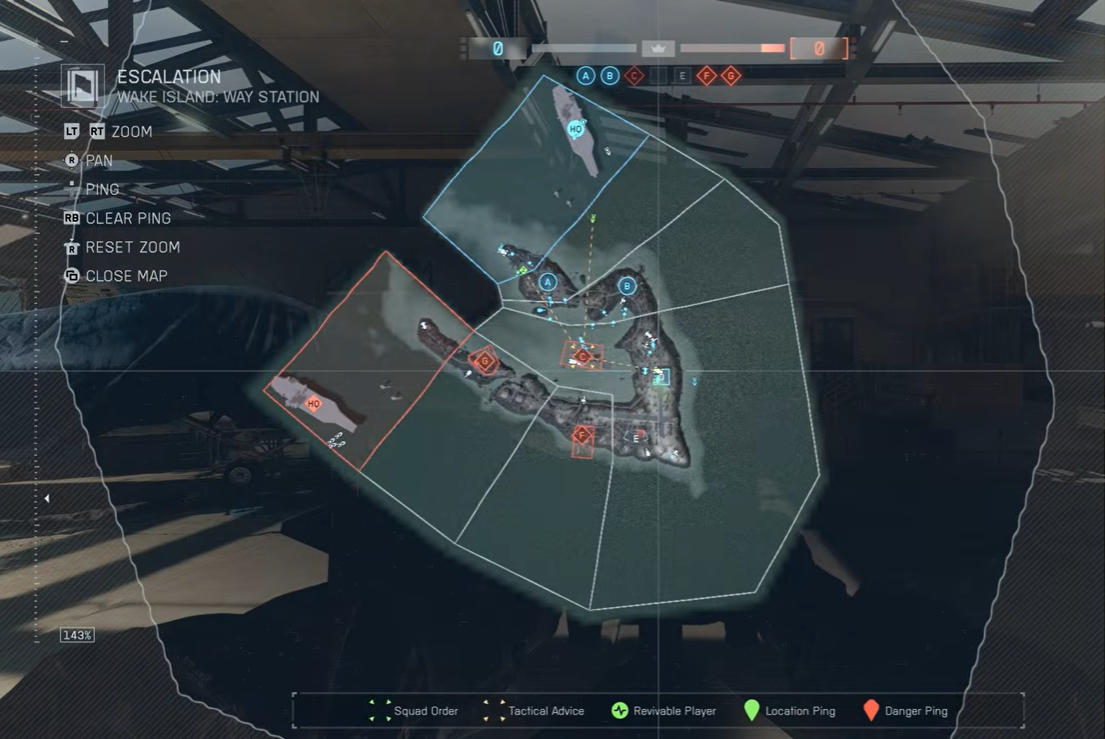
Challenge: Integrate naval combat into Escalation while maintaining balanced, large-scale warfare across infantry, land, air, and naval vehicles. I also wanted the layout to feel different from conquest, so i initially placed both team HQ’s on the island itself near A and G for each independent team faction. We got feedback about spawn camping and had to pivot placing both team HQ’s on the carrier, similar to Conquest. We also had the problem of long travel times for infantry to get to the island from the carrier and especially if all the vehicles for the team ran out and people were forced to swim from carrier to island. To solve this, we added ziplines from the carrier to the island.
Solution: I adapted an existing Escalation vehicle configuration from another Battlefield 6 map, replacing applicable vehicle spawns with boats and refining vehicle distribution for Wake Island.
Result: Delivered a balanced combined-arms experience that incorporated naval combat alongside traditional vehicle gameplay.
Rush — Improving Infantry Combat Balance
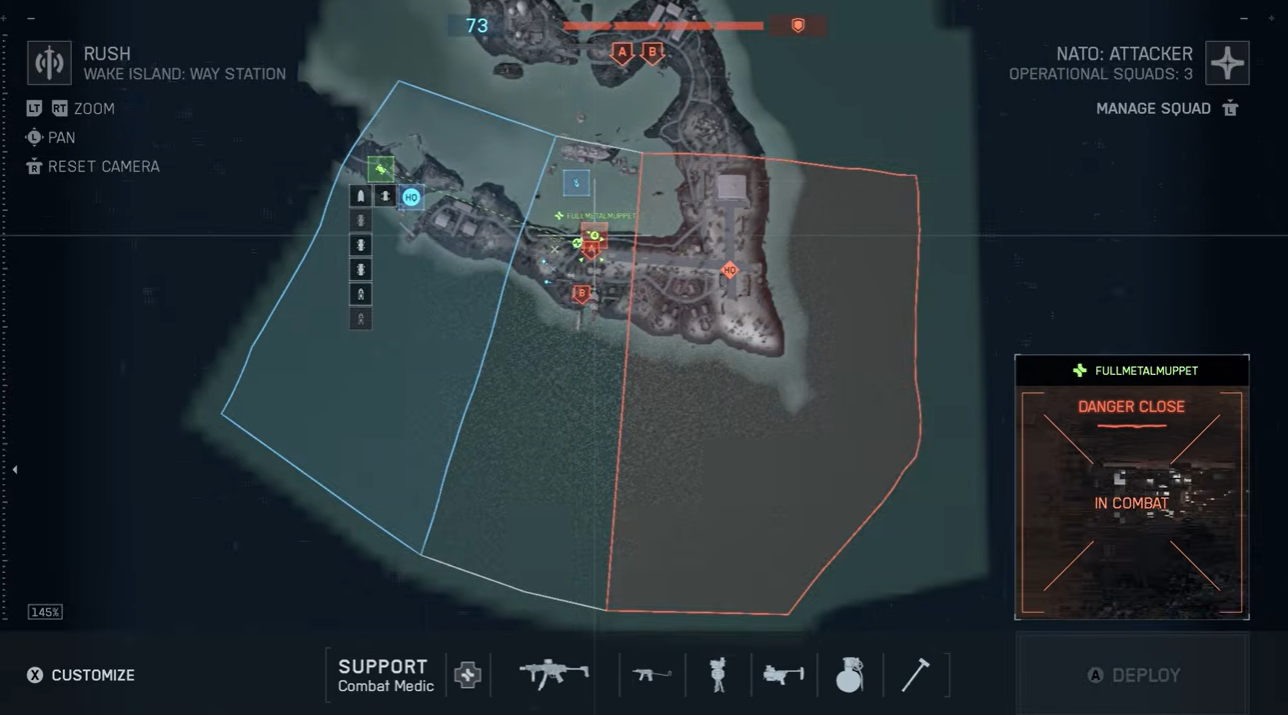
Challenge: Our original vehicle- and naval-focused Rush layout produced unbalanced gameplay, with defenders sometimes reaching objectives after attackers. We also lost the core identity of rush which was an infantry-focused mode. Because wake island has so much water and because season 4 was naval focused, we wanted to try to push naval combat and traversal into rush.
Solution: We shifted toward an infantry-focused layout. I refined spawn placement and increased light transport availability to improve defender access to objectives.
Result: Improved defender mobility, gameplay balance, and combat flow through playtest-driven iteration.
Map-Wide Traversal & Cover
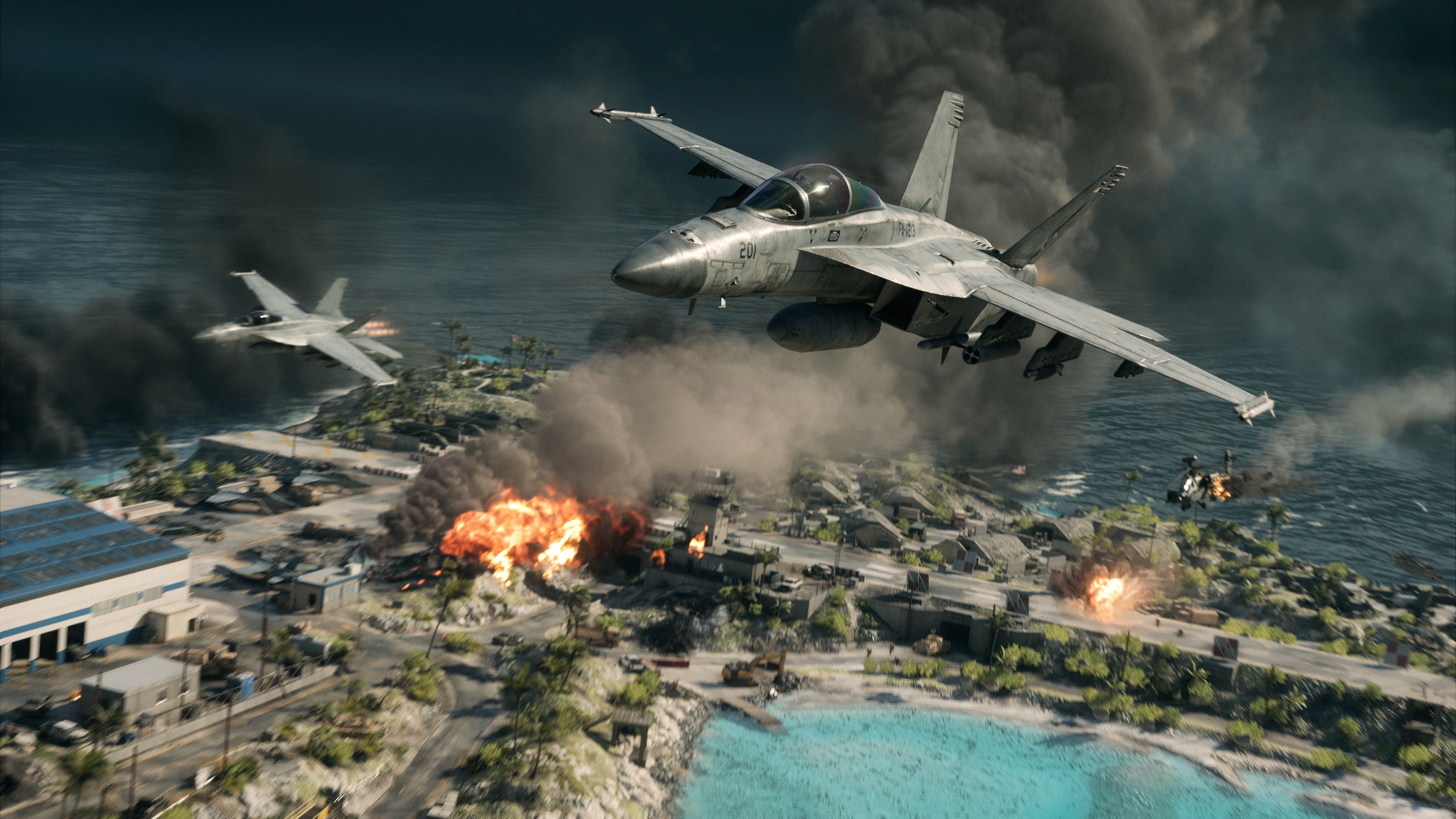
Challenge: Open terrain and long sightlines left infantry vulnerable to vehicles, while excessive vegetation reduced route readability. Infantry also experienced lengthy travel times.
Solution: I collaborated with World Art to refine cover, terrain, and vegetation while maintaining clear traversal routes. We also introduced strategically placed ziplines to shorten infantry travel times and the central shipwreck to improve cover and traversal.
Result: Improved infantry survivability, route readability, and traversal opportunities while maintaining balanced infantry and vehicle gameplay.
Breakthrough: Balancing Naval & Infantry Combat
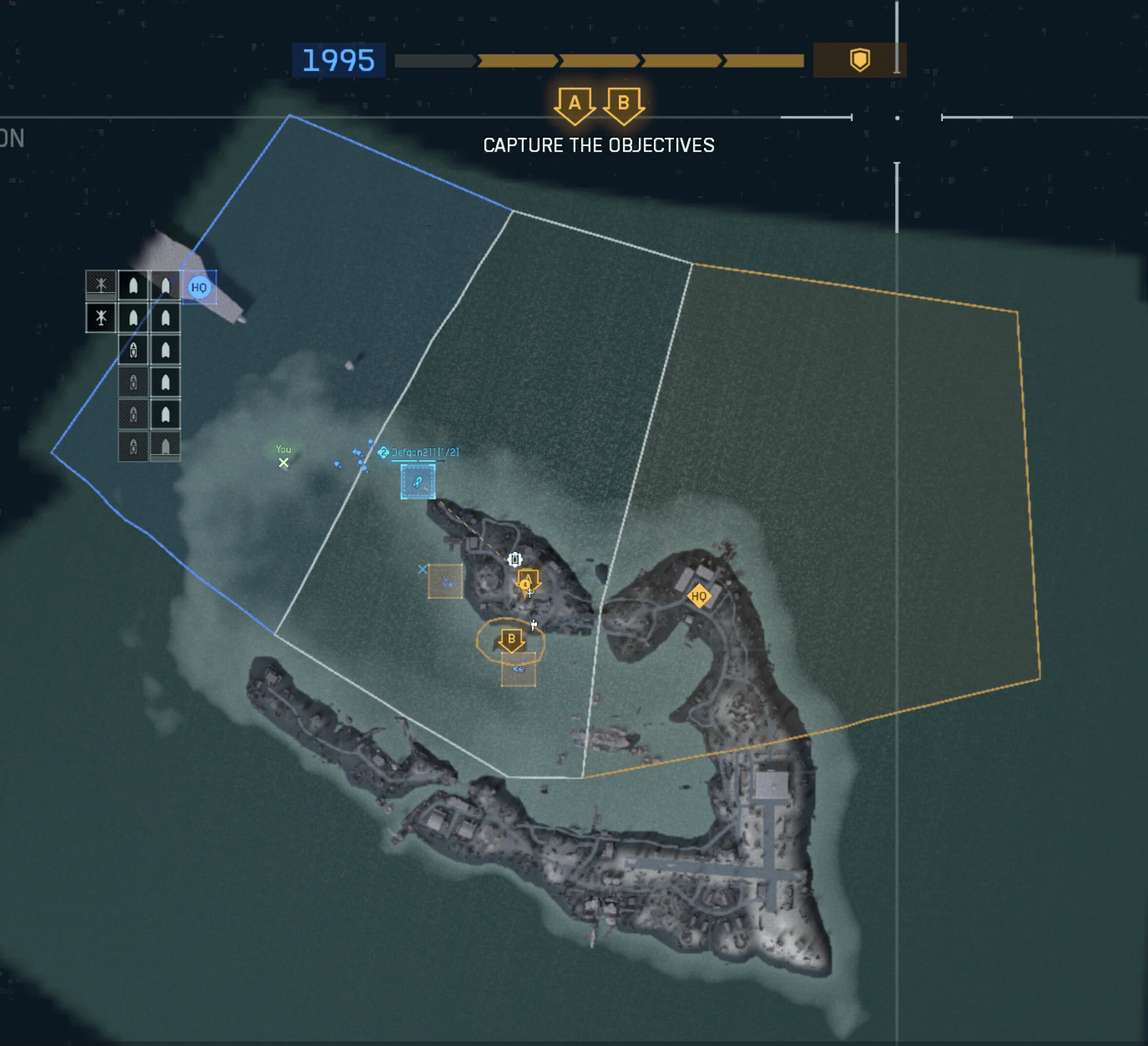
Challenge: Early layouts suffered from excessive travel times, difficult objective spacing, and restricted naval movement. Playtesting also revealed attacker-defender balance issues. In sector 1, We also had the problem of long travel times for infantry to get to the island from the carrier and especially if all the vehicles for the team ran out and people were forced to swim from carrier to island. This made it even more difficult for attackers to capture the objectives in the first sector. To solve this, we added ziplines from the carrier to the island.
Solution: We reduced the maximum number of objectives per sector to two. I expanded playable water boundaries and refined spawn placement, vehicle counts, attacker tickets, and cover using playtest feedback.
Result: Improved attacker-defender balance while creating more room for naval combat across sectors.
Small-Scale Game Modes — Improving Infantry Combat Balance
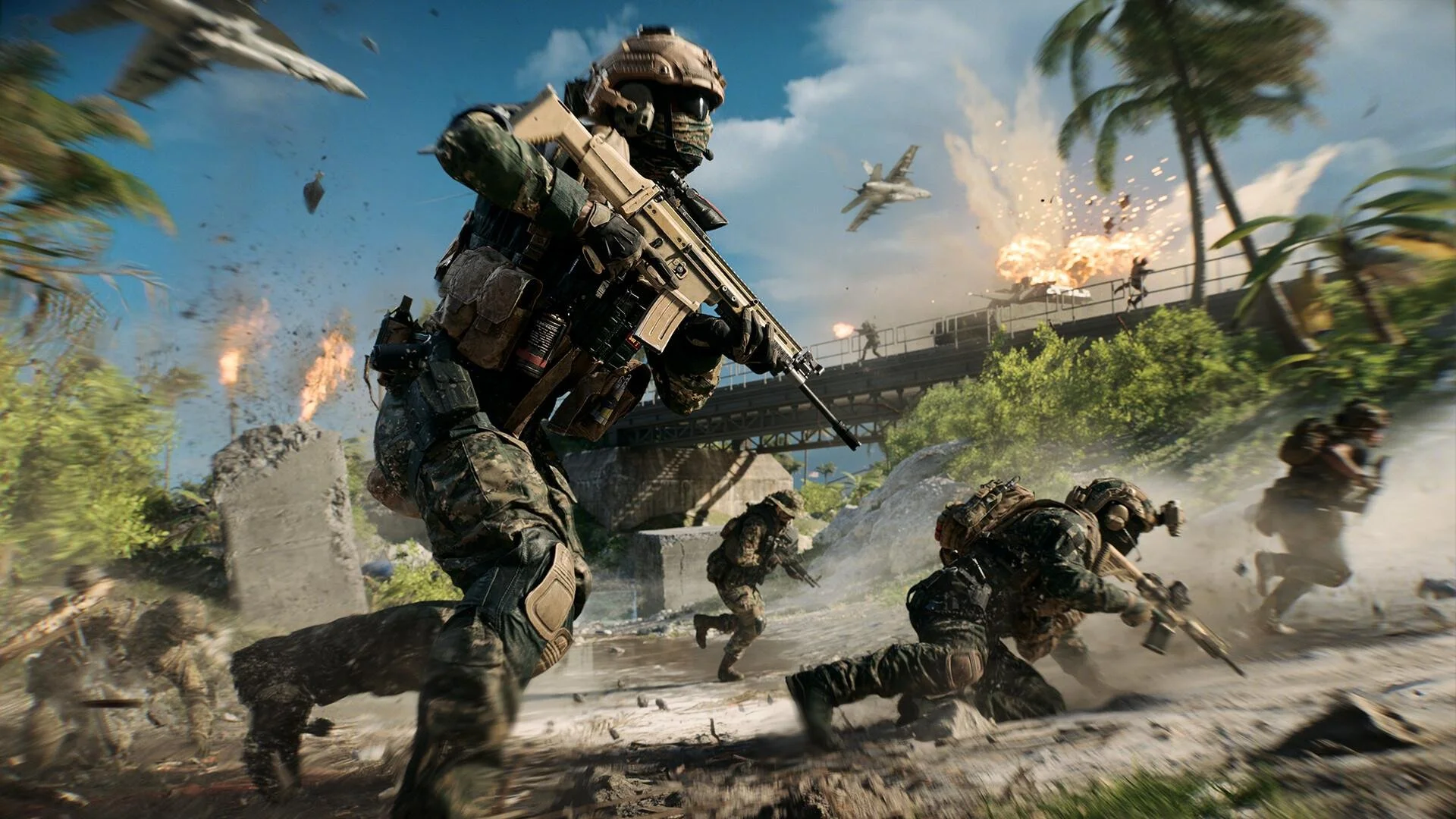
Challenge: Create balanced, infantry-focused layouts for Team Deathmatch, Domination, and Squad Deathmatch while addressing gameplay issues identified during playtesting.
Solution: I experimented with different playable-area layouts and refined infantry spawn placement using internal playtest feedback to improve combat flow and balance.
Result: Improved gameplay balance across all three modes through iterative layout and spawn adjustments.